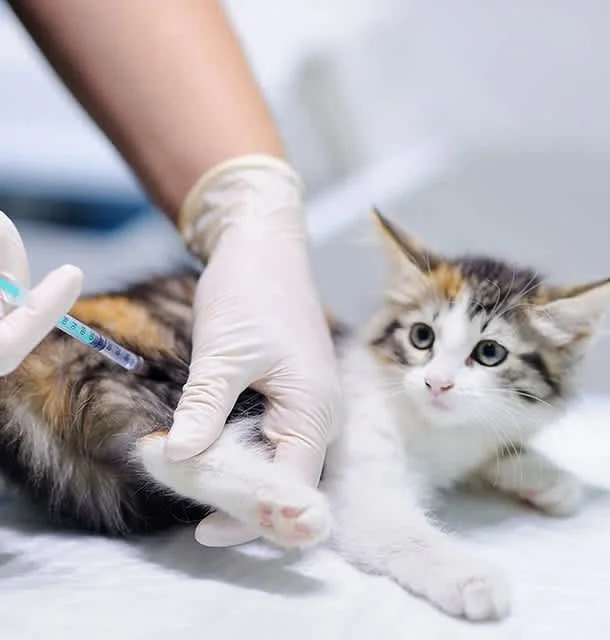
Low Cost Vaccine Services
Price List
Technician Appointment
Technician appointments are conducted by a Registered Veterinary Technician and are for basic preventative services only. If your pet needs a prescription flea treatment or you believe your pet has a medical condition you will need to schedule a veterinary exam which you can do on our veterinary services page.
RVT Exam Free
All appointments will include an $10 administrative and a $5 disposal fee. These fee helps us cover administrative costs and, supplies, and other essential clinic operating costs
Vaccinations
FVRCP Vaccine $17
Rabies Vaccine $15
Flea Treatment
Revolution Topical (applied in clinic) $20-$22
Bravecto 3 month treatment (applied in clinic) $55
Dewormers
Pyrantel (roundworms) $10
Dewormer (tapeworm and roundworm $15
Other Services
Microchip $25
FeLV/FIV Combo test $35
Nail Trim $12
At The Little Lion Foundation, we believe every cat deserves access to basic healthcare, no matter their owner’s financial situation. By offering low-cost preventative services, we can keep more cats healthy, prevent illness before it becomes an emergency, and help families provide the care their pets need without facing overwhelming costs. Accessible care not only improves the quality of life for individual cats but also supports a healthier community by reducing the spread of preventable diseases and keeping more pets in loving homes.
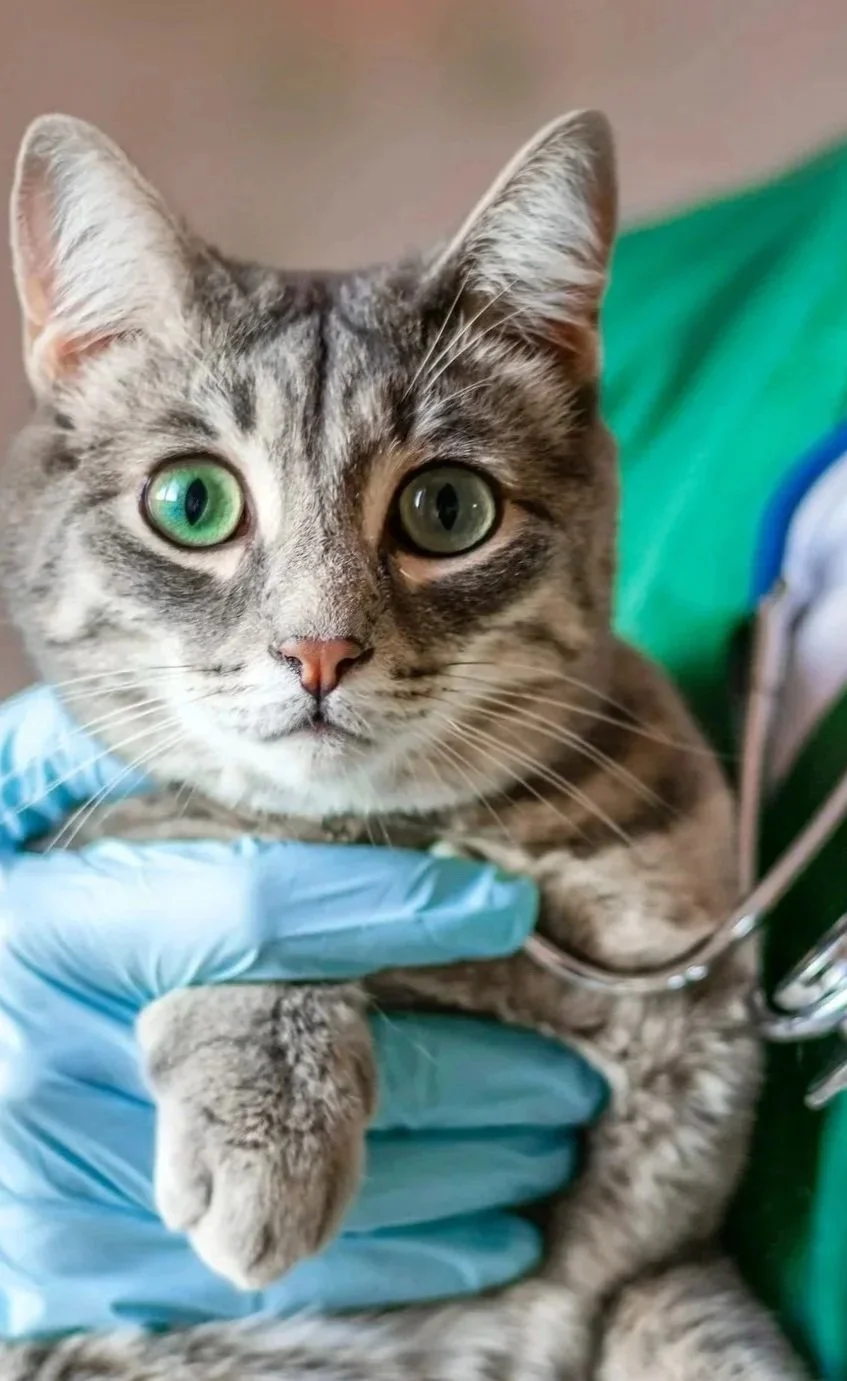
What Shots Do Kittens Need?
Vaccines help protect your kitten from several serious and potentially fatal diseases.
While vaccines are important at every age, kitten vaccinations are especially critical because the natural immunity kittens receive from their mother begins to wear off during the first weeks of life.
When given properly, vaccines stimulate your kitten’s immune system to either prevent disease entirely or significantly reduce how severe it becomes.
There are two core vaccines recommended for all kittens, plus an additional vaccine that may be recommended depending on lifestyle and risk factors.
Below is everything you need to know about kitten vaccines and vaccination schedules.
Core Kitten Vaccines
FVRCP Vaccine
All kittens should receive the FVRCP vaccine, which protects against three highly contagious and common feline diseases:
Feline Viral Rhinotracheitis (FVR)
Caused by feline herpesvirus type 1, this illness is a major cause of upper respiratory infections in cats. It spreads easily between cats, and infected cats remain carriers for life.Feline Calicivirus (FCV)
One of the most common causes of upper respiratory infections in cats. It can lead to mouth ulcers, respiratory symptoms, and chronic illness.Feline Panleukopenia (FPV)
Also known as feline distemper, this disease is caused by a parvovirus and is extremely contagious and often fatal, especially in kittens.
These three diseases are typically protected against with one combination vaccine.
Rabies Vaccine
Rabies is the second core vaccine recommended for kittens.
Rabies is a fatal disease that can affect cats, wildlife, and humans. Because it is transmissible to people, vaccination is required by law in many states.
Can be given as early as 12 weeks of age
Timing depends on state laws and your veterinarian’s recommendation
What shots do adult cats need?
Vaccines help protect adult cats from serious and potentially fatal diseases, even if they were vaccinated as kittens. Immunity can decrease over time, which is why booster vaccines are important.
All adult cats should receive core vaccines, with schedules based on age, lifestyle, and prior vaccine history.
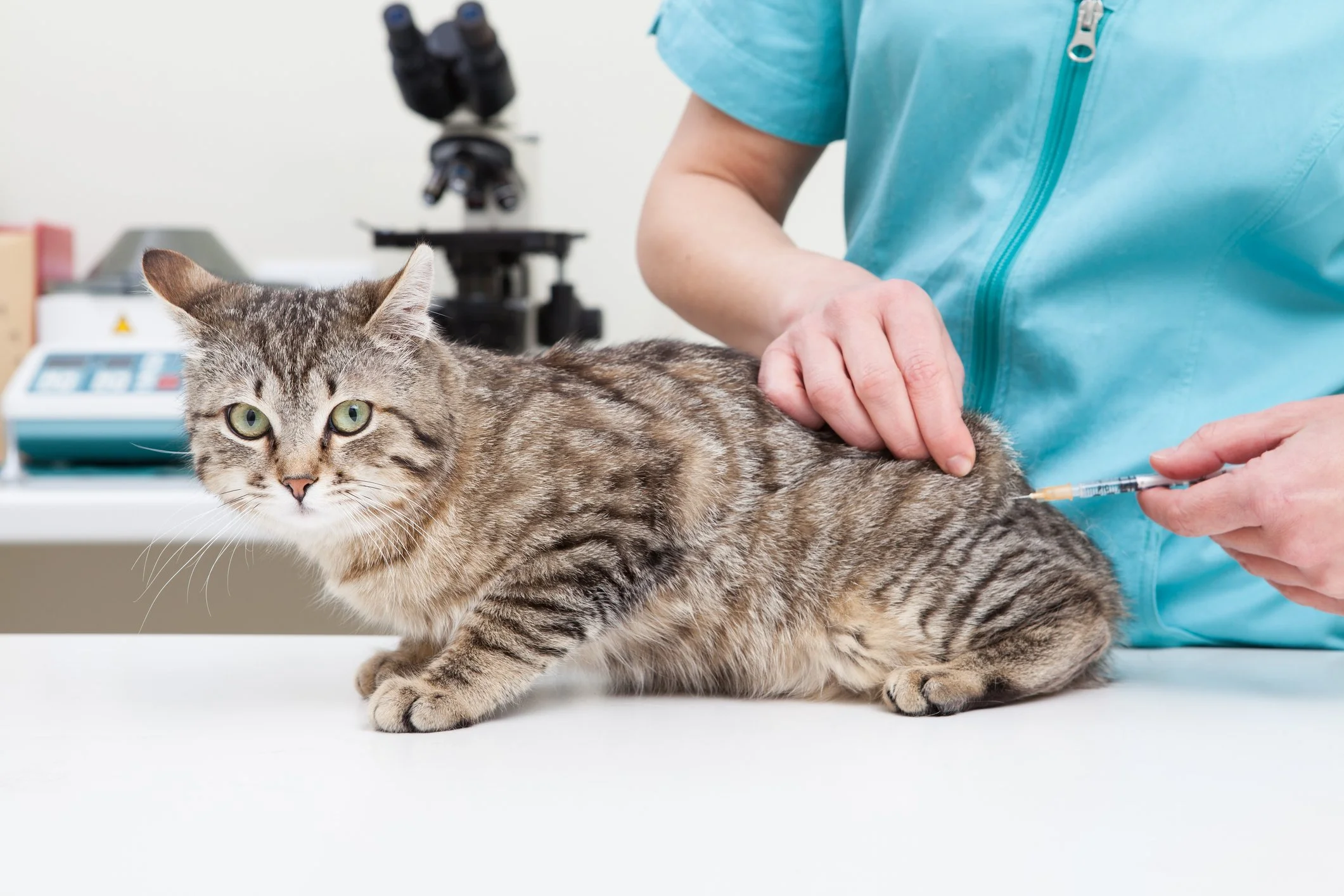
Core Adult Cat Vaccines
FVRCP
Protects against:
Feline Viral Rhinotracheitis (herpesvirus)
Feline Calicivirus
Feline Panleukopenia (feline distemper)
Most adult cats receive FVRCP boosters every 1–3 years, depending on risk and veterinary recommendation.
Rabies
Rabies is a fatal disease that can affect cats and humans. Rabies vaccination is required by law in many states.
Adult cats typically receive rabies boosters every 1 or 3 years, depending on the vaccine used and local regulations.